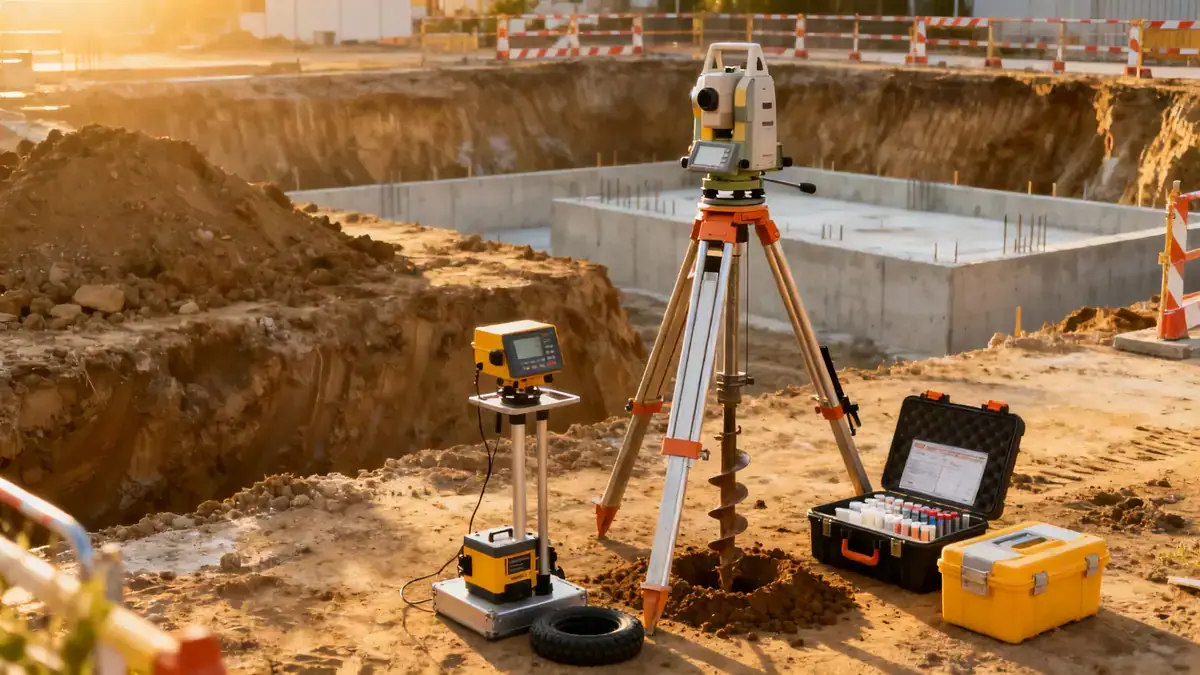
Methodology
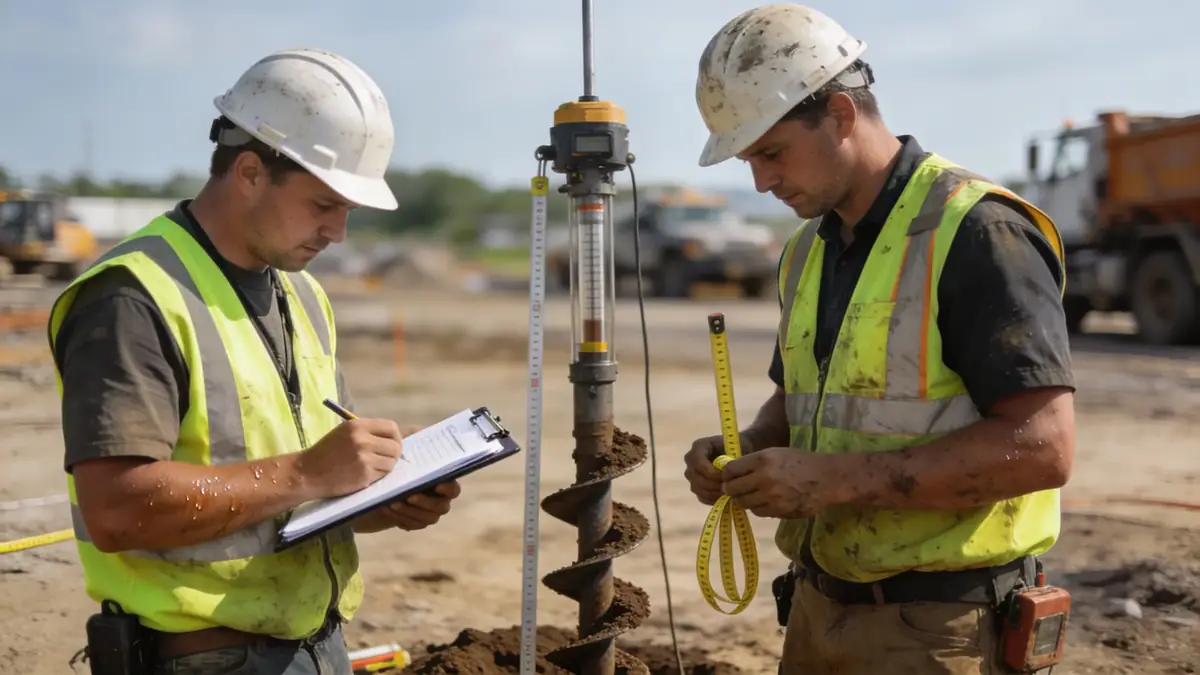
Our methodology for standard penetration test in Manchester follows BS EN ISO 22476-3, ensuring consistency with UK practice. We deploy automatic trip hammers and calibrated equipment to record N-values at 1.0 m intervals, with continuous sampling for classification. Boreholes are advanced using rotary drilling or cable percussion, depending on ground conditions. Field procedures include energy measurement to correct N60 values, per ASTM D1586 reference. All data is integrated with laboratory testing—Atterberg limits, particle size distribution, and shear strength—to develop a comprehensive ground model. Our approach aligns with the standard penetration test (spt) protocol, providing reliable parameters for foundation design in Manchester’s varied geological settings.
Reference Technical Parameters
| Parameter | Reference Value |
|---|---|
| Predominant soil type | Glacial till (boulder clay) with interbedded sand and gravel |
| Maximum seismic acceleration (PGA) | 0.05–0.10 g (low seismicity, per BS EN 1998-1) |
| Typical groundwater level | 3–6 m below ground surface |
| Bedrock depth | 10–30 m (Permo-Triassic sandstone) |
| Typical N60 range | 15–40 blows/300 mm for till; 10–30 for sand/gravel |
Local Considerations — Manchester
Manchester’s subsurface is dominated by glacial till overlying Permo-Triassic sandstone, with alluvial deposits along the Irwell and Medlock valleys. Till heterogeneity—with cobbles and boulders—can obstruct penetration, requiring careful drilling technique. Groundwater is typically shallow, especially in low-lying areas, influencing foundation design. Seismicity is low, but ground amplification in soft soils warrants site-specific assessment for critical structures. Redevelopment of brownfield sites often uncovers old foundations and contaminated ground, necessitating careful SPT interpretation. Our cone penetration test (cpt) provides complementary continuous profiling in such complex urban settings.
Request a Quote
Our team reviews your project and issues an initial report at no cost.
Or write us directly at [email protected]
Services in Manchester
Locations covered in Manchester
Applicable Standards
- BS EN ISO 22476-3: Geotechnical investigation and testing – Field testing – Part 3: Standard penetration test
- BS EN 1997-2: Eurocode 7 – Geotechnical design – Part 2: Ground investigation and testing
- BS 5930: Code of practice for ground investigations
- ASTM D1586: Standard test method for standard penetration test (SPT) and split-barrel sampling of soils
Frequently Asked Questions
What soil types are commonly encountered during standard penetration test in Manchester?
Manchester’s ground typically consists of glacial till (boulder clay) with variable sand and gravel lenses. Alluvial deposits and made ground are also common, especially along river valleys. The till often contains cobbles, which can affect SPT N-values.
Is seismic design required for foundations in Manchester?
Manchester is in a low seismicity zone (PGA <0.10 g) per BS EN 1998-1. However, for structures with importance class III or IV, site-specific seismic response analysis may be required, especially on soft alluvial deposits where ground amplification could occur.
Are geotechnical investigations mandatory for construction in Manchester?
While not legally mandatory for all projects, BS EN 1997-1 requires ground investigation for geotechnical design. Local planning authorities typically require a geotechnical report for new developments, particularly on brownfield sites or where deep foundations are proposed.