Methodology
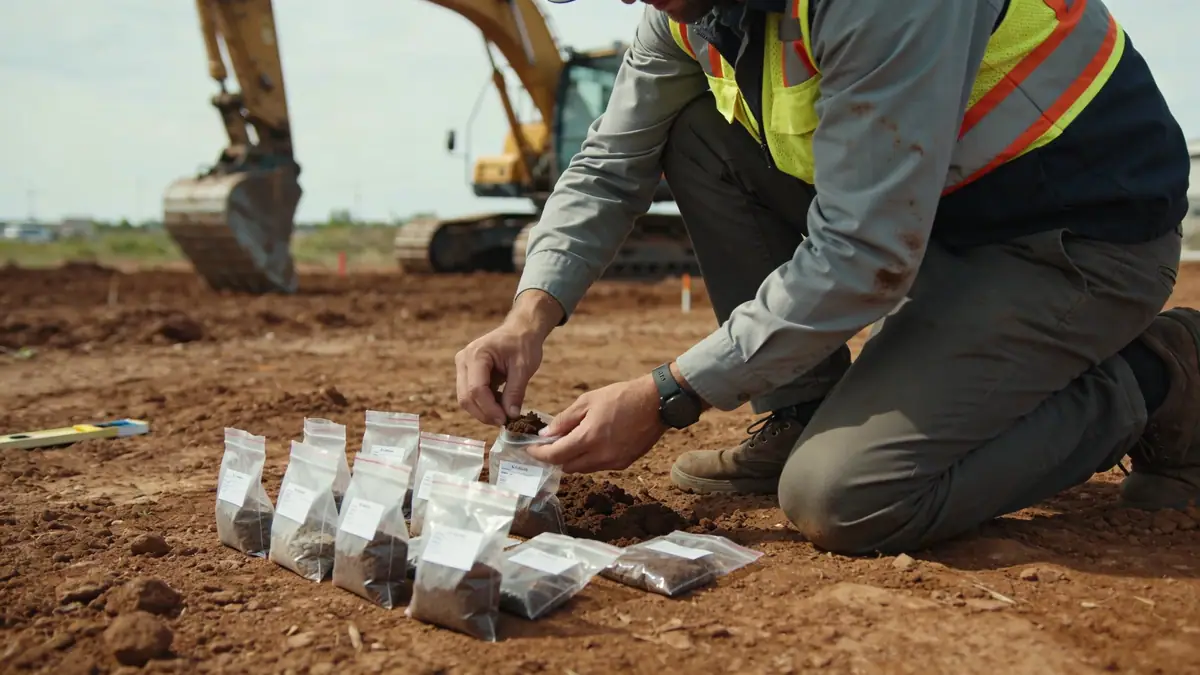
Our methodology for standard penetration test (spt) in Warrington follows strict adherence to ASTM D1586, ensuring consistent and repeatable results. We deploy fully equipped drilling rigs capable of advancing boreholes to depths exceeding 30 metres in challenging soils. The SPT is performed at 1.0 to 1.5 metre intervals, with continuous sampling for laboratory analysis. Our team records blow counts (N-values) precisely, correcting for overburden pressure and hammer efficiency to derive N60 values. This data is integrated with geotechnical modelling to assess bearing capacity, settlement, and liquefaction potential, providing clients with robust parameters for design.
Reference Technical Parameters
| Parameter | Reference Value |
|---|---|
| Predominant soil type | Glacial till and alluvial sands/clays |
| Maximum seismic acceleration (PGA) | 0.05g to 0.10g (low seismicity) |
| Typical groundwater level | 2.0 to 5.0 metres below ground level |
| Bedrock depth | Variable, typically 15 to 50 metres (Sherwood Sandstone) |
| Typical N60 range | 5 to 30 blows/300mm in cohesive soils; 10 to 50 in granular soils |
Local Considerations — Warrington
Warrington's geology is dominated by Quaternary glacial deposits overlying Triassic sandstones (Sherwood Sandstone Group). The glacial till often contains cobbles and boulders, requiring careful SPT execution to avoid misleading blow counts. Groundwater levels fluctuate seasonally, typically encountered at depths of 2–5 metres, influencing excavation dewatering strategies. The region experiences low seismic hazard (PGA <0.10g) per Eurocode 8, but local liquefaction assessments are advised for saturated sands. Contrasting soil conditions exist between the elevated areas (e.g., Appleton) with firmer till and the river valley (e.g., Latchford) with softer alluvium. Typical projects include residential foundations (shallow or piled) and industrial slabs. For broader regional context, our team also provides standard penetration test en Manchester services.
Request a Quote
Our team reviews your project and issues an initial report at no cost.
Or write us directly at [email protected]
Services in Warrington
Applicable Standards
- ASTM D1586
- Eurocode 7 (BS EN 1997)
- BS 5930
- Eurocode 8 (BS EN 1998)
Frequently Asked Questions
What soil types are commonly encountered in Warrington during SPT testing?
Warrington's subsurface typically consists of glacial till (sandy clay with gravel/cobbles) and alluvial deposits (sand, silt, clay) along the Mersey valley. SPT N-values vary widely, from soft alluvium (N60 5-15) to dense till (N60 20-50). Cobbles can cause artificially high blow counts, so careful interpretation is required.
Is seismic design required for foundations in Warrington?
Warrington is classified as low seismicity under Eurocode 8, with peak ground acceleration typically below 0.10g. However, for critical structures or sites with liquefiable soils (e.g., loose saturated sands), site-specific seismic assessments may be necessary. SPT data is used to evaluate liquefaction potential and determine soil amplification factors.
Are geotechnical investigations mandatory for construction in Warrington?
While not always legally mandated, local planning authorities and building regulations (e.g., NHBC for residential) typically require a ground investigation for new developments. Our SPT services provide essential data for foundation design, slope stability, and groundwater control, helping to mitigate risks and ensure compliance with Eurocode 7.