Methodology

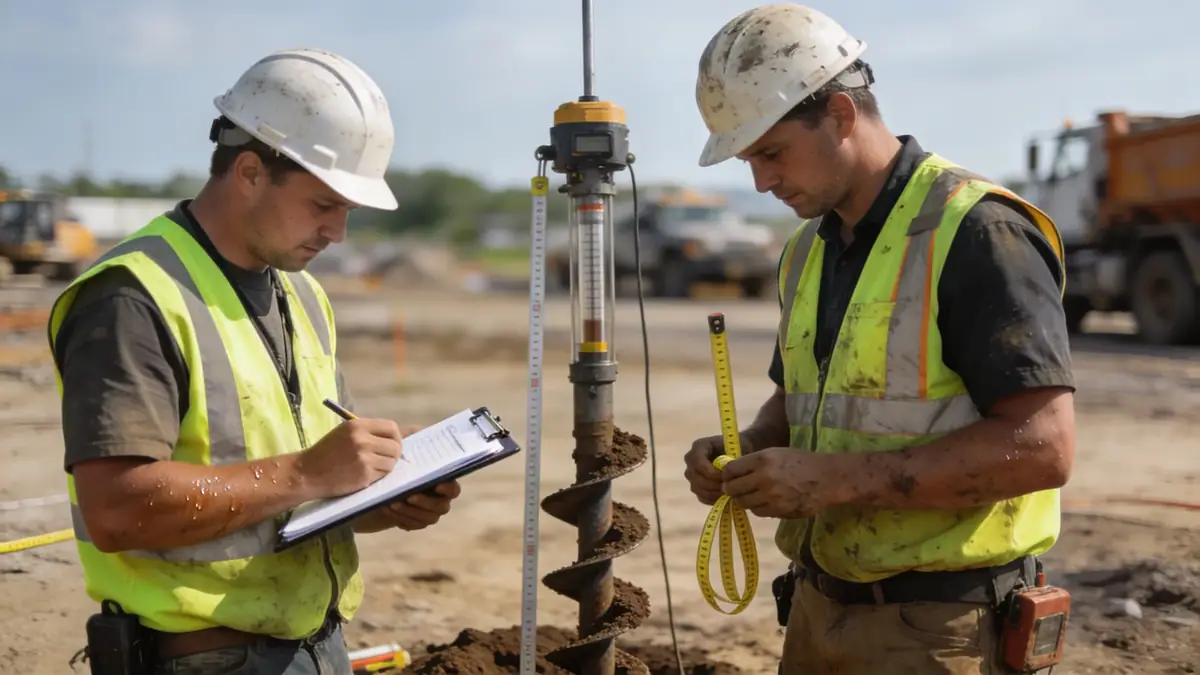
Our methodology for standard penetration test in Birkenhead follows ASTM D1586 and BS 5930. We employ a 63.5 kg hammer dropped 760 mm to drive a split-spoon sampler, recording blow counts per 150 mm increment. Sampling intervals are typically 1.0–1.5 m, reaching depths of 8–15 m for residential projects and up to 30 m for industrial sites. All equipment is calibrated before each campaign. For comprehensive profiling, we often combine SPT with cone penetration test (cpt) to obtain continuous stratigraphic logs. Our team ensures data accuracy through strict quality control, delivering reliable N60 values for foundation design in Birkenhead.
Reference Technical Parameters
| Parameter | Reference Value |
|---|---|
| Predominant soil type | Glacial till (boulder clay) with interbedded sand and gravel |
| Maximum seismic acceleration (PGA) | 0.15 g (UK National Annex to Eurocode 8) |
| Typical groundwater level | 2–5 m below ground surface |
| Bedrock depth | 20–40 m (Triassic sandstone) |
| Typical N60 range | 15–40 blows/300 mm (glacial till) |
Local Considerations — Birkenhead
Birkenhead's geology is dominated by glacial till overlying Triassic sandstone. Groundwater is typically encountered at 2–5 m depth, requiring dewatering for deep excavations. Seismic hazard is low (PGA 0.15 g per Eurocode 8), but liquefaction potential in loose sand layers should be assessed. The Wirral peninsula contrasts with Liverpool's softer alluvium; our team adapts testing methods accordingly. Common challenges include cobbles in till that impede SPT driving, and variable fill on brownfield sites. For broader regional context, see our standard penetration test en Manchester hub. We also integrate dpsh dynamic probing for rapid profiling of coarse soils.
Request a Quote
Our team reviews your project and issues an initial report at no cost.
Or write us directly at [email protected]
Services in Birkenhead
Applicable Standards
- ASTM D1586
- BS 5930
- Eurocode 7
- UK National Annex to Eurocode 8
Frequently Asked Questions
What soil types are commonly found in Birkenhead?
Birkenhead's subsurface is primarily glacial till (boulder clay) with interbedded sand and gravel lenses. Underlying this is Triassic sandstone bedrock at depths of 20–40 m. Alluvial deposits occur near the Mersey estuary, and made ground is common on redeveloped industrial sites.
Is seismic design required for foundations in Birkenhead?
Yes, Eurocode 8 applies across the UK, including Birkenhead. The peak ground acceleration (PGA) for the region is 0.15 g, classified as low seismic hazard. However, site-specific ground response analysis may be needed for critical structures, especially where soft soils amplify ground motion.
Are geotechnical investigations mandatory for new buildings in Birkenhead?
While not legally mandated for all projects, local building control and NHBC guidelines require ground investigation for foundation design. Standard penetration test is commonly specified to characterize soil strength and variability, ensuring compliance with Eurocode 7 and safe construction.