
Methodology
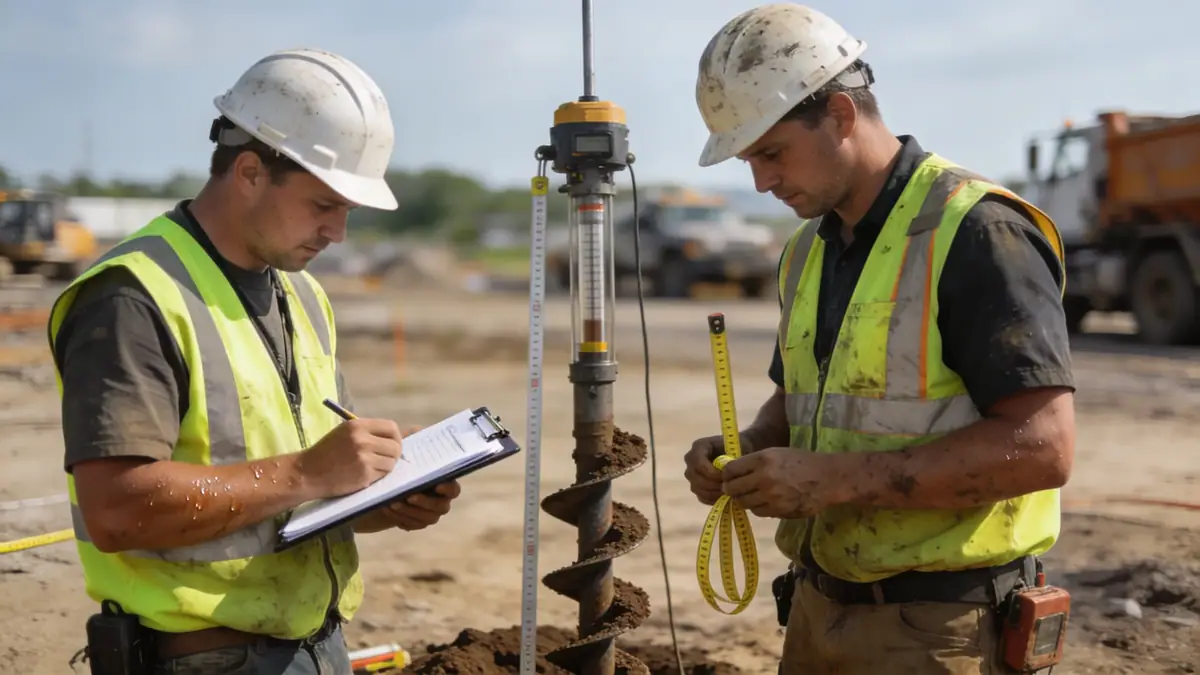
Our methodology for standard penetration test (SPT) in Bristol follows the procedures outlined in ASTM D1586 and Eurocode 7. We deploy a 63.5 kg hammer dropped 760 mm to drive a split-spoon sampler into the soil, recording blow counts per 150 mm interval. The N-value is corrected for overburden and energy efficiency to obtain N60, which is correlated with soil strength and density. This approach provides a consistent basis for geotechnical characterisation across Bristol's varied lithologies, from the Mercia Mudstone to the alluvial terraces. Our team ensures that each test is performed at the specified depth intervals, typically 1.0–1.5 m, to capture stratigraphic changes. The data is then integrated with other site investigations, such as cone penetration test (cpt) and laboratory testing, to deliver a comprehensive ground model for foundation design.
Reference Technical Parameters
| Parameter | Reference Value |
|---|---|
| Predominant soil type | Mercia Mudstone, alluvial deposits, terrace gravels |
| Maximum seismic acceleration (PGA) | 0.15 g (UK National Annex to Eurocode 8) |
| Typical groundwater level | 2–5 m below ground surface (variable with season) |
| Bedrock depth | 5–30 m (Mercia Mudstone) |
| Typical N60 range | 5–50 blows/300 mm (cohesive to dense granular) |
Local Considerations — Bristol
Bristol's geology is dominated by the Mercia Mudstone, a weak to moderately strong mudstone with interbedded siltstone and sandstone. In the Avon Valley, alluvial deposits of soft clay and peat overlie terrace gravels, posing challenges for shallow foundations. Groundwater levels are typically high in these low-lying areas, often within 2–3 m of the surface. Seismic hazard is low but considered via UK National Annex to Eurocode 8, with peak ground acceleration around 0.15 g. The central business district often requires deeper dpsh dynamic probing to characterise the mudstone's weathering profile. Our local experience includes numerous projects in the Harbourside and Clifton areas, where variable fill and colluvium complicate ground conditions.
Request a Quote
Our team reviews your project and issues an initial report at no cost.
Or write us directly at [email protected]
Services in Bristol
Locations covered in Bristol
Applicable Standards
- ASTM D1586
- Eurocode 7 (EN 1997-1, EN 1997-2)
- UK National Annex to Eurocode 8 (BS EN 1998-1:2004)
- BS 5930:2015 (Code of practice for ground investigations)
Frequently Asked Questions
What are the typical soil conditions encountered in Bristol during SPT?
Bristol's soils range from Mercia Mudstone bedrock to alluvial clays and gravels. SPT N60 values vary from 5 in soft alluvial deposits to over 50 in dense gravels or weak mudstone. The mudstone often exhibits a weathered zone near the surface, requiring careful interpretation.
Is seismic design required for foundations in Bristol?
Yes, although seismic hazard is low, Eurocode 8 with UK National Annex applies. The design peak ground acceleration is 0.15 g for the Bristol region. For critical structures, site-specific response analysis may be needed, informed by SPT data to assess liquefaction potential in sandy layers.
Are geotechnical investigations mandatory for construction in Bristol?
Building regulations require adequate ground information to ensure structural safety. While not explicitly mandatory for all minor works, most developments undergo a phase 1 desk study followed by SPT or other intrusive investigations, especially in areas with variable alluvial or filled ground.