Methodology
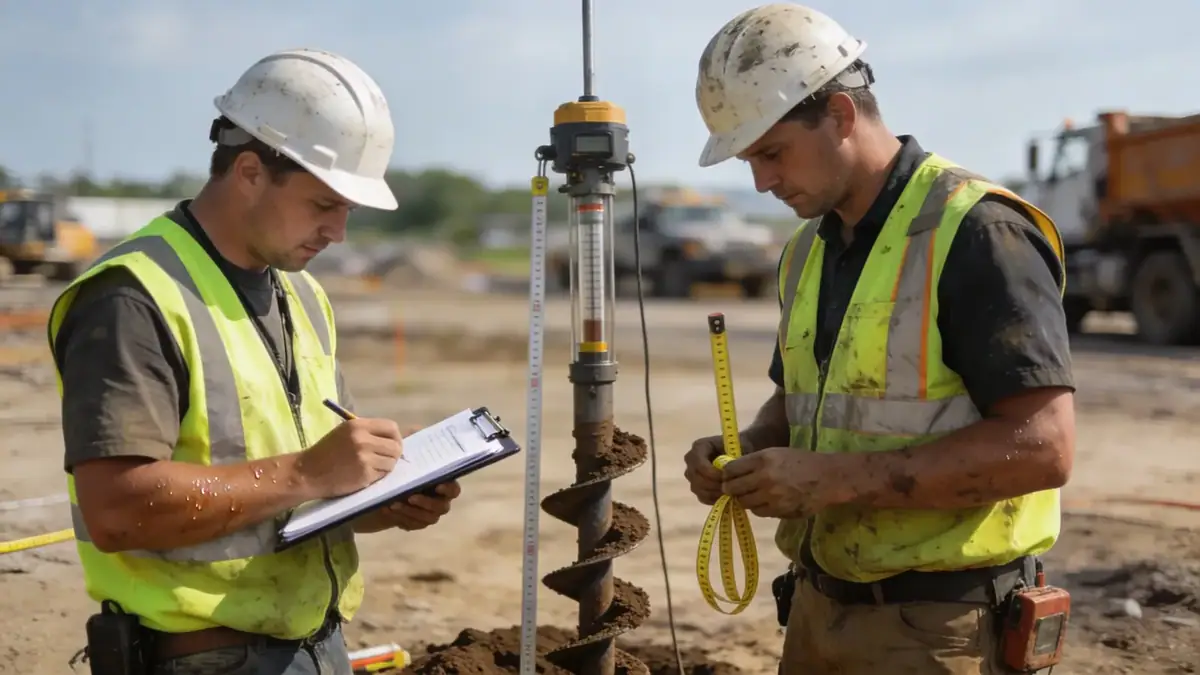
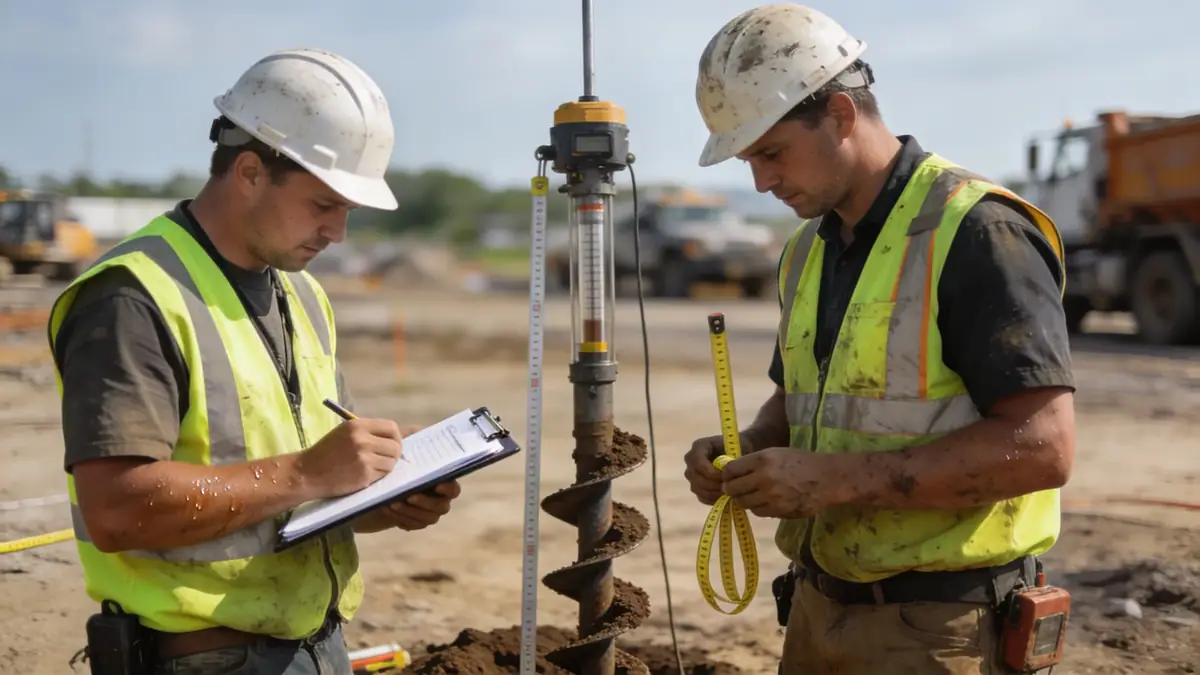
Our methodology for standard penetration test (spt) in Cardiff follows ASTM D1586, with boreholes advanced using rotary drilling or percussion methods. We record blow counts (N-value) at 1.5 m intervals, with continuous sampling in critical zones. Soil samples are retrieved for classification and laboratory testing, including moisture content and grain size analysis. The team uses calibrated hammers and automatic trip mechanisms to ensure energy efficiency meets the 60% standard. Data interpretation incorporates correction factors for overburden and rod length, providing reliable N60 values for foundation design. This systematic approach aligns with local ground conditions and project requirements, delivering consistent results across Cardiff.
Reference Technical Parameters
| Parameter | Reference Value |
|---|---|
| Predominant soil type | Glacial till and river terrace deposits |
| Maximum seismic acceleration (PGA) | 0.10 g (moderate seismicity) |
| Typical groundwater level | 2–5 m below ground surface |
| Bedrock depth | 10–30 m (Mercia Mudstone Group) |
| Typical N60 range | 15–40 blows/0.3 m in competent till |
Local Considerations — Cardiff
Cardiff's subsurface is predominantly glacial till overlying Mercia Mudstone bedrock, with river terrace deposits along the Taff and Ely valleys. Groundwater is generally shallow, ranging from 2 to 5 m depth, requiring dewatering considerations for excavations. Seismic hazard is moderate per Eurocode 8, with PGA around 0.10 g, influencing liquefaction assessments in loose sands. Contrasts exist between the central alluvial areas and higher ground in northern suburbs, where bedrock is nearer the surface. Typical projects include high-rise developments in the city centre and infrastructure along the bay, where cone penetration test (cpt) is often used alongside SPT for detailed profiling.
Request a Quote
Our team reviews your project and issues an initial report at no cost.
Or write us directly at [email protected]
Services in Cardiff
Locations covered in Cardiff
Applicable Standards
- BS 5930:2015 – Code of practice for ground investigations
- Eurocode 7 (BS EN 1997-1 and 1997-2)
- ASTM D1586 – Standard Test Method for Standard Penetration Test
- Eurocode 8 (BS EN 1998-1) – Seismic design
Frequently Asked Questions
What soil conditions are typical in Cardiff for foundation design?
Cardiff's soils are mainly glacial tills and river terrace deposits. Tills provide good bearing capacity (N60 20–40), while alluvial sands and gravels require careful assessment for liquefaction. High groundwater in low-lying areas may need dewatering or piled foundations.
How does seismic risk affect SPT testing in Cardiff?
Cardiff has moderate seismicity (PGA ~0.10 g) under Eurocode 8. SPT data helps evaluate liquefaction potential in loose granular layers. Corrected N60 values are used in empirical liquefaction triggering correlations to ensure safe design for buildings and infrastructure.
Are SPT investigations mandatory for construction projects in Cardiff?
While not always mandatory, SPT is standard for major developments under BS 5930 and local building control. For high-rise or seismically sensitive structures, geotechnical investigations including SPT are essential to meet Eurocode 7 requirements and ensure foundation safety.