Methodology

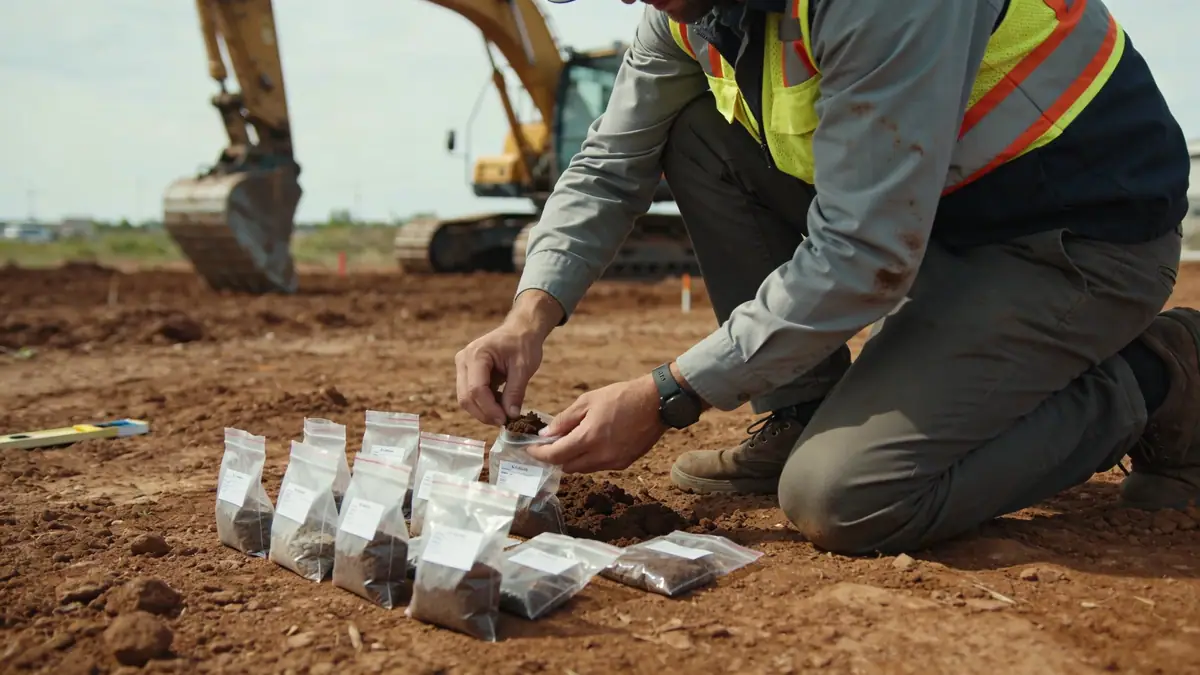
Our standard penetration test methodology in Bournemouth follows BS 5930 and Eurocode 7 guidelines. We deploy a 63.5 kg hammer with a 760 mm drop to drive a split-spoon sampler, recording blow counts (N-value) at 1.0 m intervals to a maximum depth of 30 m, depending on project requirements. Corrections for overburden pressure and hammer efficiency are applied to derive N60 values. In variable ground conditions, such as interbedded sands and clays, we integrate SPT results with cone penetration test (CPT) data for a comprehensive profile. Our approach ensures repeatability and comparability across sites, supporting reliable geotechnical design parameters.
Reference Technical Parameters
| Parameter | Reference Value |
|---|---|
| Predominant soil type | Valley gravels, London Clay, chalk |
| Maximum seismic acceleration (PGA) | 0.10g to 0.15g (Eurocode 8) |
| Typical groundwater level | 2–5 m below ground level |
| Bedrock depth | 30–50 m (chalk) |
| Typical N60 range | 10–30 (sands), 5–15 (clays) |
Local Considerations — Bournemouth
Bournemouth's geology is dominated by Quaternary valley gravels overlying London Clay and chalk bedrock. Groundwater levels are typically shallow, between 2 and 5 m, requiring careful dewatering during excavation. Seismic hazard is low to moderate (PGA 0.10–0.15g per Eurocode 8), but soft soils may amplify ground motion. Coastal areas near Boscombe and Southbourne present loose sands and variable fill, while inland zones like Moordown feature more consistent clay. Brownfield sites often contain anthropogenic deposits. For regional context, our team also provides standard penetration test en Bristol services. Additionally, we offer cone penetration test (cpt) for detailed profiling in variable ground.
Request a Quote
Our team reviews your project and issues an initial report at no cost.
Or write us directly at [email protected]
Services in Bournemouth
Applicable Standards
- BS 5930
- Eurocode 7 (EN 1997)
- Eurocode 8 (EN 1998)
- ASTM D1586
Frequently Asked Questions
What soil types are commonly encountered in Bournemouth?
Bournemouth typically features valley gravels, London Clay, and chalk. Near the coast, loose sands and estuarine deposits are common, while inland areas have more uniform clay. Understanding these variations is critical for selecting appropriate foundation solutions.
Are standard penetration tests mandatory for building permits in Bournemouth?
While not universally mandatory, local authorities and structural engineers typically require SPT data for medium to large developments, especially in areas with variable ground conditions or seismic considerations. Early geotechnical investigation is recommended to avoid delays.
How does seismic hazard affect SPT requirements in Bournemouth?
Bournemouth lies in a low-to-moderate seismicity zone (PGA 0.10–0.15g). However, soft soils can amplify ground motions. SPT N-values are used to assess liquefaction potential and site classification per Eurocode 8, guiding foundation design for seismic resilience.