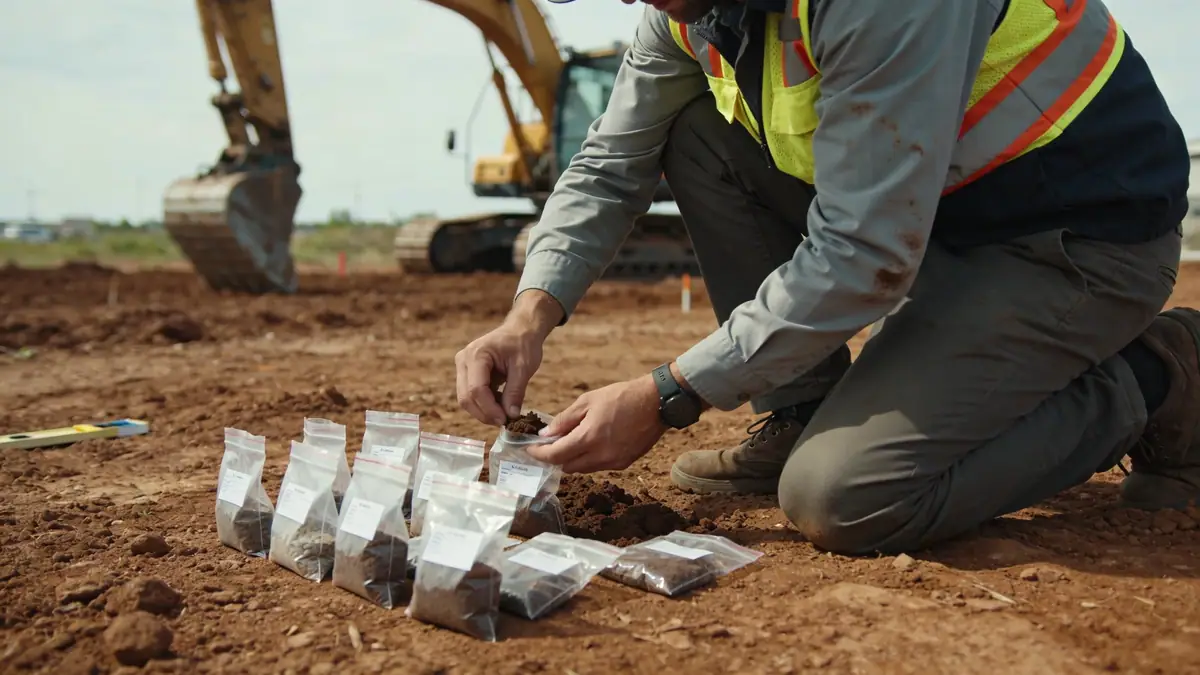
Methodology
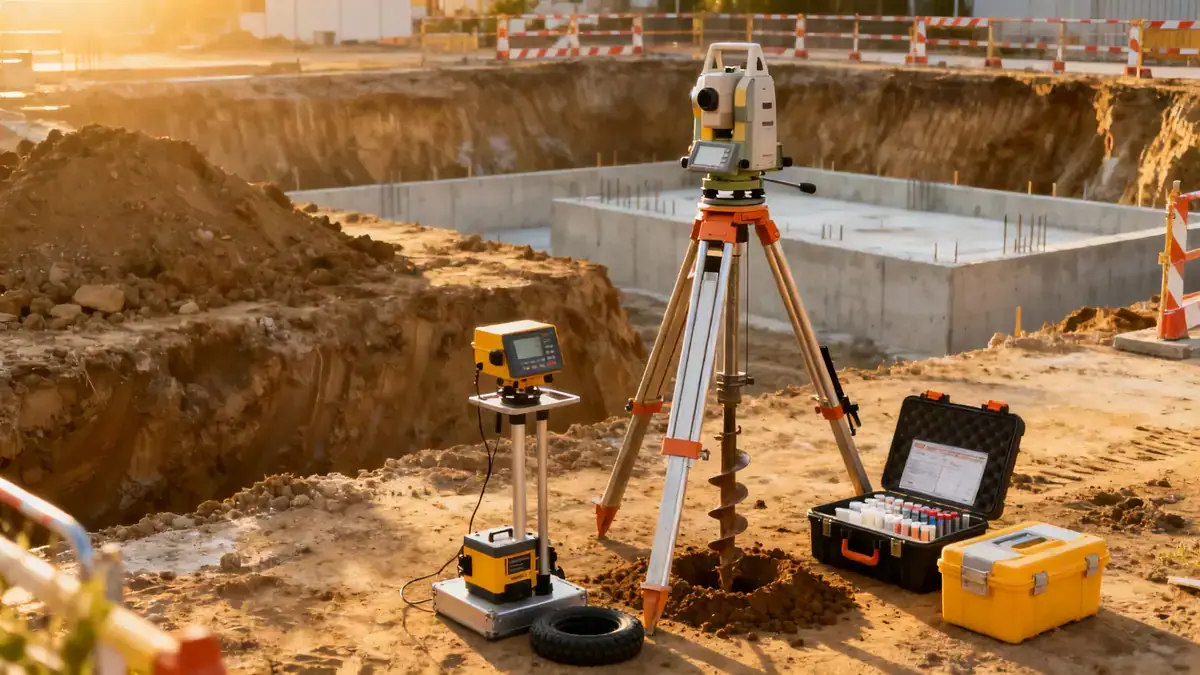
Our approach to standard penetration testing in Luton follows the procedures outlined in ASTM D1586 and BS 5930. We employ a 63.5 kg hammer dropped from 760 mm to drive a split-barrel sampler, recording blow counts per 150 mm increment to determine N-values. Testing is typically conducted at 1.0 to 1.5 m intervals within boreholes advanced by rotary drilling or cable percussion. This method provides reliable data on soil density and stratigraphy, which is essential for foundation design in Luton's variable glacial deposits. For continuous profiling, we also offer cone penetration test (cpt) as a complementary technique.
Reference Technical Parameters
| Parameter | Reference Value |
|---|---|
| Predominant soil type | Glacial till (boulder clay) over chalk |
| Typical N60 range (till) | 15 to 40 blows per 300 mm |
| Maximum seismic PGA (UK) | 0.05g to 0.10g (low seismicity) |
| Typical groundwater level | 5 to 15 m below ground surface |
| Bedrock depth (chalk) | 10 to 30 m below ground surface |
Local Considerations — Luton
Luton's geology is dominated by glacial till overlying the Lewes Nodular Chalk Formation. The till is highly variable, with lenses of sand and gravel that can affect bearing capacity. Groundwater is generally deep but may be encountered in the chalk. Seismic hazard is low per UK standards (PGA <0.10g), but site-specific assessment is recommended for tall structures. Older industrial areas may contain made ground requiring careful investigation. Our team has extensive experience across Luton's districts, from the town centre to peripheral developments. For regional context, our standard penetration test en London provides a benchmark for similar ground conditions.
Request a Quote
Our team reviews your project and issues an initial report at no cost.
Or write us directly at [email protected]
Services in Luton
Applicable Standards
- ASTM D1586
- BS 5930
- Eurocode 7 (BS EN 1997)
- NHBC Standards (for residential)
Frequently Asked Questions
What are the typical soil conditions encountered during standard penetration testing in Luton?
Luton's subsurface typically consists of glacial till (boulder clay) overlying chalk bedrock. The till is dense to very dense, with N60 values ranging from 15 to 40. Sand and gravel lenses are common, and the chalk provides a competent bearing stratum at depth.
Is standard penetration testing required for building projects in Luton?
Yes, for most new builds and significant alterations, UK building regulations require a ground investigation. SPT is a preferred method to assess soil strength and variability, particularly in Luton's variable till. It is often specified by structural engineers and NHBC for foundation design.
How does seismic hazard affect standard penetration testing in Luton?
The UK has low seismicity, with PGA values typically below 0.10g. While seismic design is less critical than in active regions, SPT data is used to evaluate liquefaction potential in saturated sands. For most Luton sites, seismic considerations are minimal, but site-specific assessment may be needed for critical structures.