Methodology

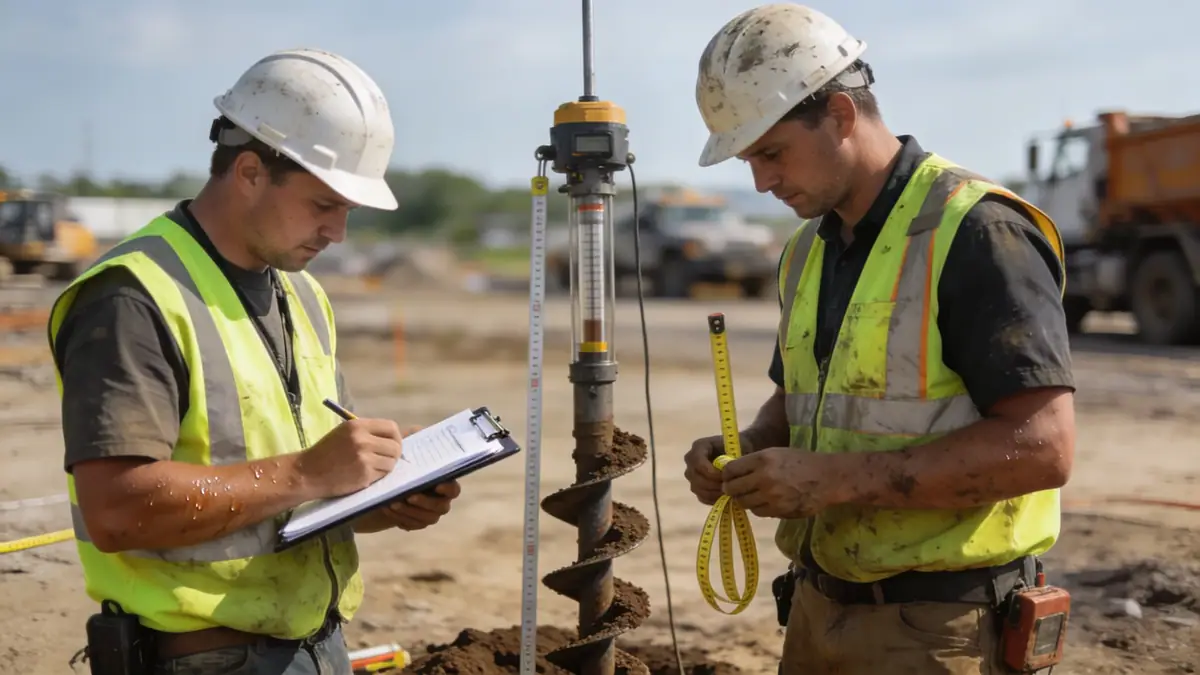
Our methodology for standard penetration test in Hull follows ASTM D1586, using a 63.5 kg hammer dropped from 760 mm to drive a split-barrel sampler. We record blow counts per 150 mm increment to determine N-values, which are corrected for energy efficiency and overburden pressure. In Hull's variable soils—from soft alluvial clays to dense glacial tills—our approach ensures representative sampling. We integrate SPT results with other techniques such as cone penetration test (cpt) to provide a comprehensive ground model. Our team tailors testing intervals based on project requirements, typically every 1.0–1.5 m, and depths up to 30 m for industrial sites.
Reference Technical Parameters
| Parameter | Reference Value |
|---|---|
| Predominant Soil Type | Glacial till and alluvial clay/silt |
| Maximum Seismic Acceleration (PGA) | 0.15g (Eurocode 8 Zone) |
| Typical Groundwater Level | 1.0–3.0 m below ground surface |
| Bedrock Depth | >30 m (Chalk bedrock variable) |
| Typical N60 Range | 5–15 (soft to firm clay), 20–40 (dense till) |
Local Considerations — Hull
Hull's geology is dominated by glacial till from the Devensian glaciation, overlying Cretaceous chalk at depth. The alluvial deposits of the Humber estuary create soft, compressible layers near the surface, with groundwater typically shallow. Seismic hazard is low to moderate per Eurocode 8, with PGA around 0.15g. The city's post-industrial redevelopment and flood defense projects require careful geotechnical characterization. For deep foundations, our team integrates SPT with dpsh dynamic probing to map till density. We also offer standard penetration test en Leeds for regional projects.
Request a Quote
Our team reviews your project and issues an initial report at no cost.
Or write us directly at [email protected]
Services in Hull
Applicable Standards
- ASTM D1586
- Eurocode 7 (EN 1997)
- BS 5930:2015
- Eurocode 8 (EN 1998)
- NHBC Standards
Frequently Asked Questions
What soil conditions are typical for standard penetration test in Hull?
Hull's subsurface consists of soft alluvial clays and silts overlying dense glacial till. SPT N-values in the upper 5 m often range from 5 to 15, increasing to 20–40 in the till. Groundwater is typically encountered at 1–3 m depth.
Is seismic design required for projects in Hull?
Yes, per Eurocode 8, Hull falls in a low to moderate seismicity zone with a peak ground acceleration (PGA) of approximately 0.15g for the reference return period. Site-specific SPT data is used to classify ground type and assess liquefaction potential.
Are geotechnical investigations mandatory for construction in Hull?
While not statutorily mandatory for all projects, NHBC Standards and local building regulations strongly recommend a ground investigation. For larger developments or where shallow groundwater is present, a standard penetration test program is essential to ensure safe foundation design.