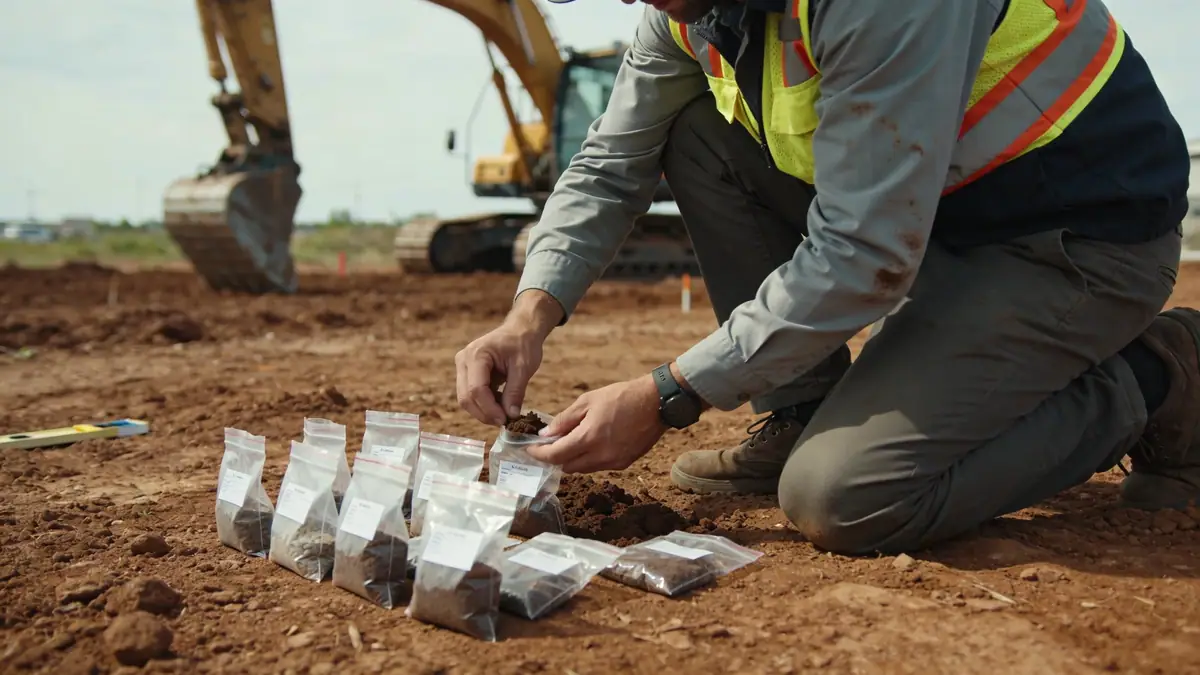
Methodology
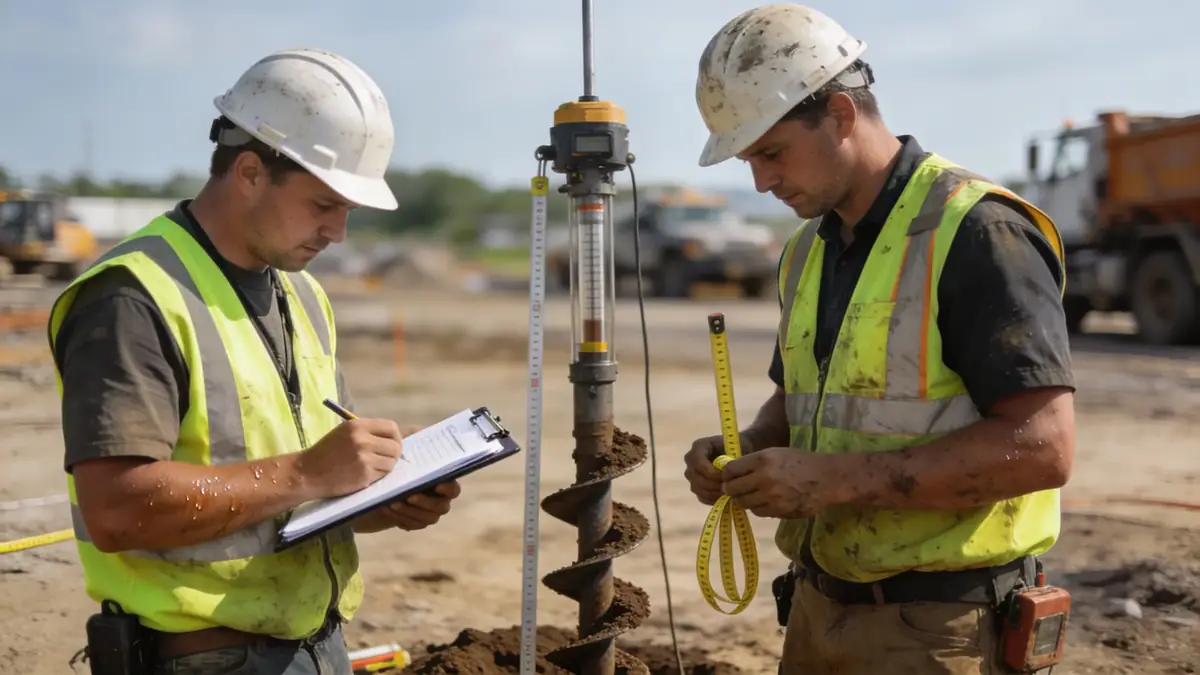
Our methodology for standard penetration test (SPT) in Cambridge follows ASTM D1586, using a 63.5 kg hammer dropped 760 mm to drive a split-spoon sampler. We record blow counts (N-value) every 1.0–1.5 m, typically reaching depths of 8–15 m for residential projects and up to 30 m for industrial sites. Corrections for overburden and rod length are applied to obtain N60 values. The process integrates with complementary methods like cone penetration test (cpt) to enhance stratigraphic interpretation.
Reference Technical Parameters
| Parameter | Reference Value |
|---|---|
| Predominant soil type | Glacial till (boulder clay) and river terrace gravels |
| Maximum seismic acceleration (PGA) | 0.05–0.10 g (low seismicity per UK National Annex to Eurocode 8) |
| Typical groundwater level | 2–5 m below ground surface (variable seasonally) |
| Bedrock depth | >50 m (Jurassic clays and chalk underlying superficial deposits) |
| Typical N60 range | 10–30 for granular soils; 5–20 for cohesive tills |
Local Considerations — Cambridge
Cambridge's geology comprises glacial tills overlying Gault Clay and Chalk, with river terrace deposits along the Cam. Groundwater is shallow in low-lying areas, affecting excavation and testing. The region is seismically low-hazard (PGA <0.10g), per Eurocode 8. In contrast, central Cambridge may exhibit higher water tables near the river, while peripheral sites often have stiffer tills. Our team adapts sampling intervals to local conditions. For broader coverage, we also coordinate with standard penetration test en London.
Request a Quote
Our team reviews your project and issues an initial report at no cost.
Or write us directly at [email protected]
Services in Cambridge
Applicable Standards
- ASTM D1586
- Eurocode 7 (BS EN 1997-2)
- BS 5930:2015 (Code of practice for ground investigations)
- UK National Annex to Eurocode 8 (seismic design)
Frequently Asked Questions
What soil types are commonly encountered in Cambridge?
Cambridge predominantly has glacial till (boulder clay) and river terrace gravels, with occasional peat deposits in fen-edge areas. These soils require site-specific SPT to assess variability and bearing capacity.
Is seismic analysis required for projects in Cambridge?
Seismic analysis is generally not mandatory due to low seismicity (PGA <0.10g). However, for critical structures or deep excavations, Eurocode 8 may apply, and SPT data helps in liquefaction assessment.
Are geotechnical investigations compulsory for building in Cambridge?
While not legally mandatory for all projects, local planning authorities often require ground investigation reports. SPT is a standard method to inform foundation design, especially for larger developments.