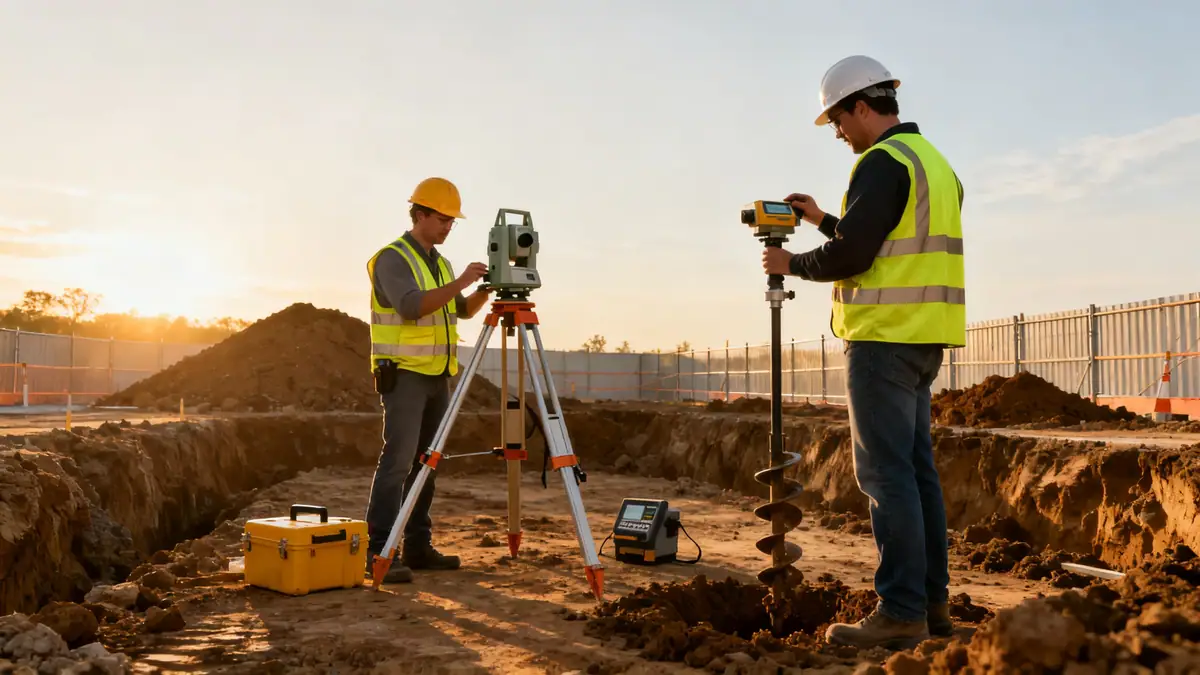
Methodology
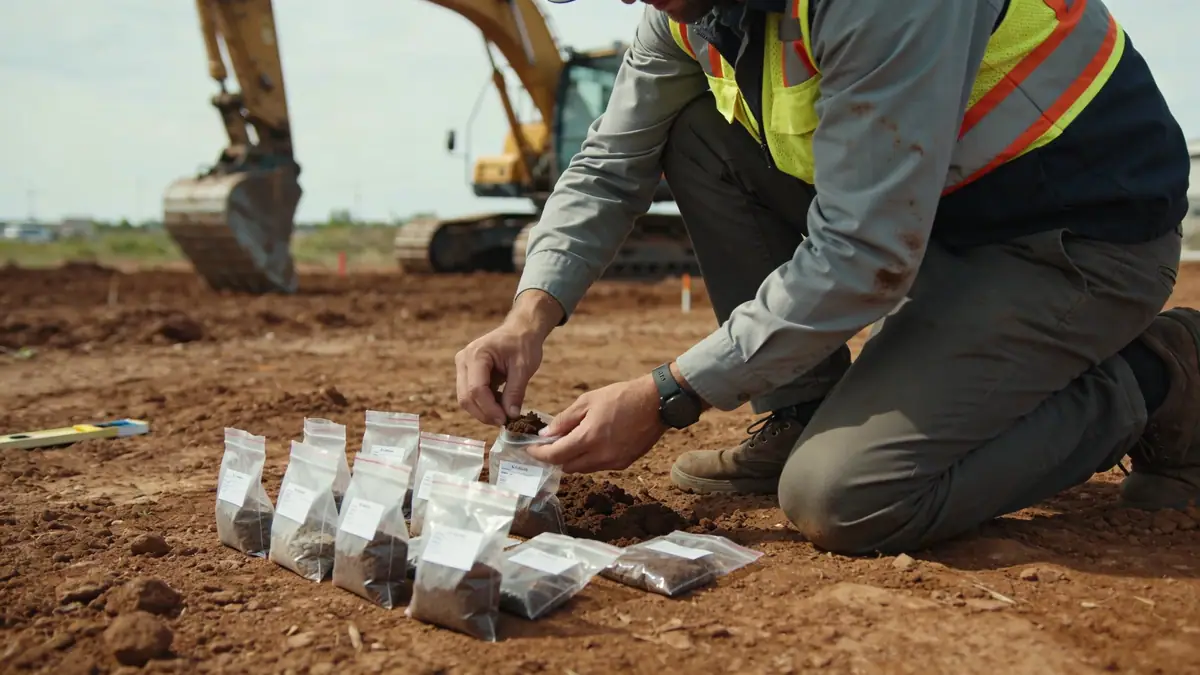
Our methodology for standard penetration testing in Bradford follows strict adherence to ASTM D1586, ensuring consistent and reliable results across all projects. We deploy mechanized drill rigs equipped with standard split-spoon samplers to retrieve disturbed samples at 1.5-meter intervals, recording blow counts (N-values) for each 300 mm penetration. Field procedures include careful measurement of groundwater levels and recovery ratios. Our laboratory subsequently classifies soils per BS 5930 and performs index tests. This systematic approach provides clients with a robust dataset for geotechnical analysis. For advanced profiling, we complement SPT with cone penetration test (cpt) where continuous stratigraphic logging is required.
Reference Technical Parameters
| Parameter | Reference Value |
|---|---|
| Predominant soil type | Glacial till (boulder clay) with sand and gravel lenses |
| Maximum seismic acceleration (PGA) | 0.08 g (low seismicity, per UK National Annex to Eurocode 8) |
| Typical groundwater level | 2 to 6 m below ground surface, variable with season |
| Bedrock depth | 10 to 30 m (Millstone Grit or Coal Measures) |
| Typical N60 range | 10 to 40 blows/300 mm, increasing with depth |
Local Considerations — Bradford
Bradford's subsurface is dominated by glacial till, a stiff clay with occasional cobbles, which can cause refusal during standard penetration testing if not approached with appropriate energy correction. Groundwater levels fluctuate significantly, especially near the Aire Valley, requiring careful monitoring during drilling. Although seismic hazard is low (PGA < 0.1 g), site-specific assessments per Eurocode 7 are recommended for critical structures. Contrasting conditions between the city centre (made ground over till) and suburban areas (shallow till over bedrock) demand tailored investigation plans. Typical projects include foundation verification for Victorian terraces and new builds. For broader regional context, our team also offers standard penetration test en Leeds.
Request a Quote
Our team reviews your project and issues an initial report at no cost.
Or write us directly at [email protected]
Services in Bradford
Applicable Standards
- ASTM D1586
- BS 5930
- Eurocode 7
- UK National Annex to Eurocode 8
Frequently Asked Questions
What soil types are typically encountered in Bradford?
Bradford's geology predominantly consists of glacial till (boulder clay) with interbedded sands and gravels. In valley areas, alluvial deposits may be present. Bedrock is typically Millstone Grit or Coal Measures at depths of 10 to 30 m.
Is seismic assessment required for construction in Bradford?
Seismic hazard in Bradford is low, with a peak ground acceleration of approximately 0.08 g. However, Eurocode 8 requires site-specific assessments for certain structures, and our standard penetration test data helps classify ground type for seismic design.
When is a standard penetration test mandatory in Bradford?
Local building regulations often require geotechnical investigations for new foundations, especially in areas with variable ground conditions. SPT is recommended for structures over three storeys or where shallow foundations are planned, to verify bearing capacity.