Methodology
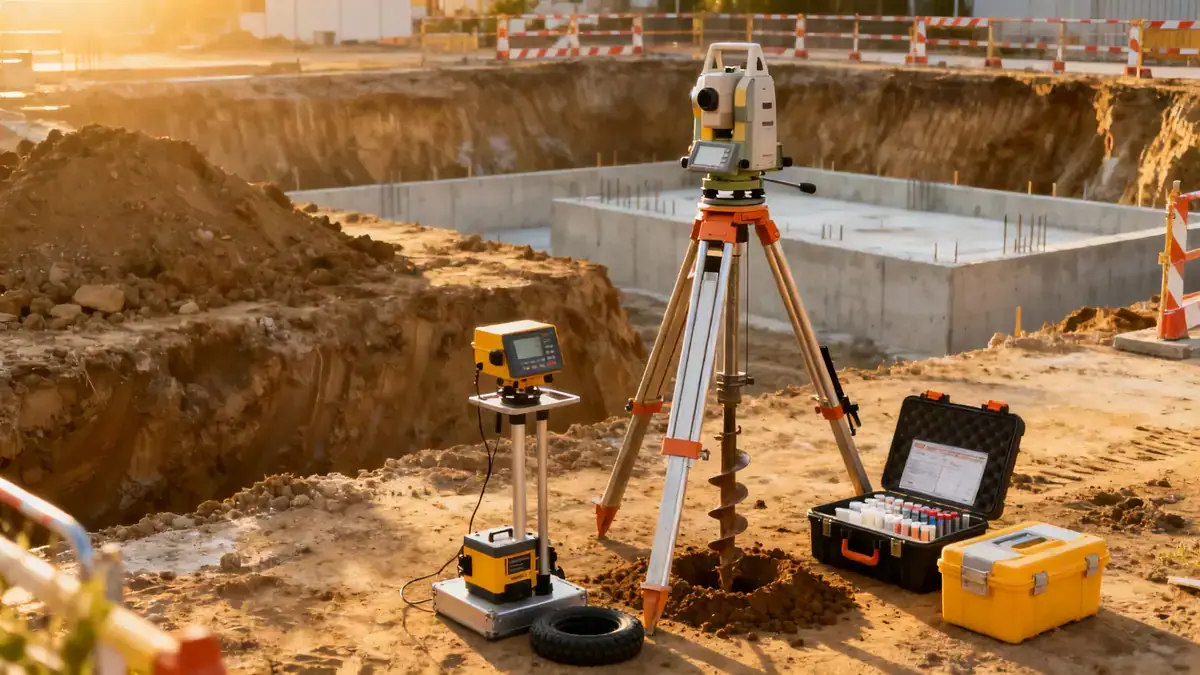
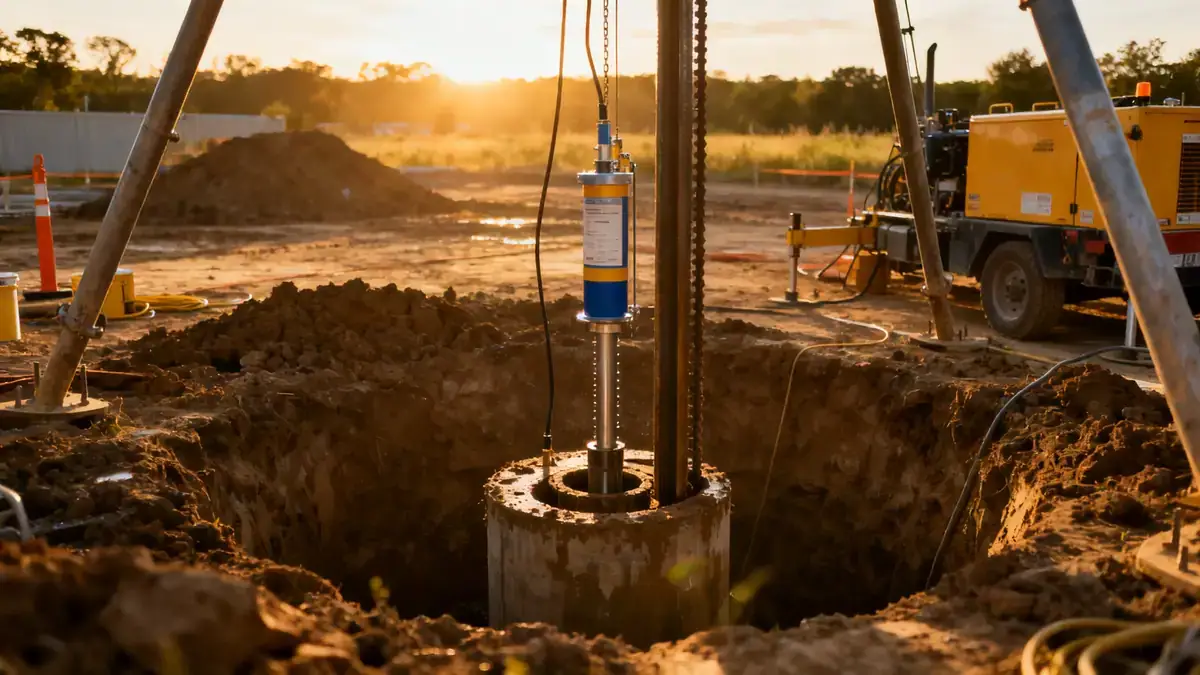
Our methodology for standard penetration test in Aberdeen follows strict adherence to ASTM D1586 and BS 5930. We employ a 63.5 kg hammer with a 760 mm drop to drive a split-barrel sampler, recording blow counts per 150 mm penetration. The test is performed at 1.5 m intervals, or as specified, to develop continuous soil profiles. Corrections for overburden pressure and hammer efficiency are applied to obtain N60 values. For detailed profiling, we integrate SPT with cone penetration test (cpt) to complement stratigraphic interpretation. Our team ensures all equipment is calibrated and procedures are documented, providing reliable data for geotechnical design in Aberdeen's variable ground conditions.
Reference Technical Parameters
| Parameter | Reference Value |
|---|---|
| Predominant soil type | Glacial till (boulder clay) & fluvial sands/gravels |
| Maximum seismic acceleration (PGA) | 0.05g to 0.10g (Eurocode 8) |
| Typical groundwater level | 1.5 to 4.0 m below ground surface |
| Bedrock depth | Typically 5 to 15 m (Devonian sandstone) |
| Typical N60 range | 10 to 40 blows/300mm (till); 5 to 20 (sand) |
Local Considerations — Aberdeen
Aberdeen's subsurface is dominated by glacial till and fluvial deposits overlying Devonian sandstone. The till is often dense with cobbles, requiring careful SPT procedures to avoid refusal. Groundwater levels are shallow, particularly near the River Dee, affecting excavation stability. Seismic hazard is low according to Eurocode 8, but local amplification may occur in soft soils. The city's coastal location imposes marine influences on soil salinity and corrosion potential. Our team adapts SPT methods to these conditions, ensuring representative samples. For regional context, our standard penetration test en Glasgow provides additional insight into similar glacial terrains.
Request a Quote
Our team reviews your project and issues an initial report at no cost.
Or write us directly at [email protected]
Services in Aberdeen
Applicable Standards
- ASTM D1586
- BS 5930
- Eurocode 7 (EN 1997-2)
- Eurocode 8 (EN 1998-5)
Frequently Asked Questions
What soil types are commonly encountered in Aberdeen?
Aberdeen typically features glacial till (boulder clay) with cobbles, fluvial sands and gravels, and occasional peat deposits. Bedrock is Devonian sandstone at variable depths. SPT is effective in these soils, though cobbles may cause refusal. Our team uses experienced judgment to select appropriate methods.
Is seismic design required for projects in Aberdeen?
According to Eurocode 8, Aberdeen lies in a low seismicity region (PGA 0.05-0.10g). However, seismic considerations may be necessary for critical structures or soft soil sites. SPT provides data for liquefaction assessment and site classification per EC8. Our reports address these requirements.
Are geotechnical investigations mandatory in Aberdeen?
While not always mandatory, local planning authorities often require ground investigation for new developments, especially in areas with variable ground conditions. The Building Standards (Scotland) Regulations 2004 imply a duty of care. SPT is a standard method to satisfy these requirements.